
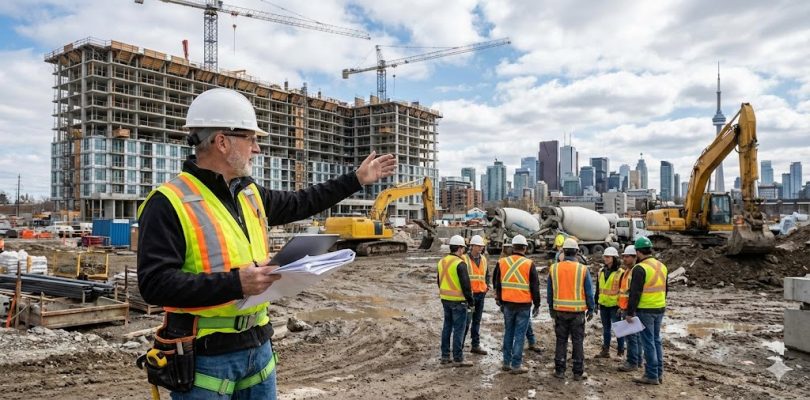
Have you ever walked past a Construction site and wondered who keeps everything running safely and on schedule every single day? If you enjoy solving problems, leading teams, and seeing buildings come to life, a career as a Site Superintendent (daily Construction Site manager) in Ontario might be a perfect fit for you.
Job Description
A Site Superintendent is the person who oversees the day-to-day operations on a construction site in Ontario. You coordinate trades, manage schedules, ensure Safety, communicate with inspectors, and keep the project moving according to the plans, budget, and building codes. You are the onsite leader and the main point of contact for what happens in the field.
Daily Work Activities
Your day often starts early—usually before 7 a.m.—with a site walk to plan the day’s tasks and make sure the site is safe. You hold a brief toolbox talk to discuss hazards, weather, and priorities with the crew. Throughout the day, you organize deliveries, inspect work for quality, resolve conflicts, coordinate subcontractors, meet with building inspectors, update schedules, and document everything. You also ensure the site complies with Ontario’s Occupational Health and Safety Act (OHSA) and Construction Projects regulation (O. Reg. 213/91).
Here’s what a typical day might include:
- Reviewing drawings and updated schedules.
- Coordinating trades (Electrical, mechanical, Concrete, Framing, glazing, finishes).
- Checking that permits and inspections are in place.
- Managing site logistics (crane/lift plans, deliveries, hoarding, Traffic Control).
- Documenting progress and problems in daily site logs.
- Enforcing safety procedures and PPE requirements.
- Communicating with the Project Manager about costs, changes, and resources.
- Resolving onsite issues fast, from weather disruptions to design clarifications.
Main Tasks (bullet points)
- Lead daily safety meetings and enforce site safety under OHSA and O. Reg. 213/91.
- Create and adjust lookahead schedules (1–3 weeks) and coordinate manpower.
- Review construction drawings, specifications, and RFIs to plan work.
- Inspect workmanship and materials to ensure Quality Control and building code Compliance.
- Organize and track Delivery schedules, storage, and handling of materials.
- Coordinate and supervise subcontractors; verify completion of scopes.
- Maintain accurate daily site reports (photos, work performed, crew counts, delays).
- Support municipal and third‑party inspections; close out deficiencies.
- Implement site logistics plans (fencing, access, crane use, waste, temporary utilities).
- Manage site safety documentation (JSAs, incident reports, permits).
- Report progress, risks, and changes to the Project Manager and client.
- Ensure environmental Controls (erosion/sediment, dust, noise) and proper utility locates via Ontario One Call.
- Prepare for occupancy and turnover (commissioning, as-builts, Training).
Required Education
There is no single pathway to becoming a Site Superintendent in Ontario. Many people move up from the skilled trades (e.g., carpentry, electrical, concrete), while others come through college or university programs in construction Management or civil engineering. Employers usually look for a mix of education and hands-on site experience.
Diplomas
- Certificate (Graduate Certificate/Continuing Education):
- One-year programs in Construction Management or Construction Project Management help you learn Scheduling, estimating, contracts, and site Coordination. These are ideal if you already have a trade background or a diploma/degree in a related field.
- College Diploma (2–3 years):
- Programs like Construction Engineering Technician/Technology, Civil Engineering Technology, or Architectural Technology provide strong technical and site fundamentals.
- Bachelor’s Degree (4 years):
- Honours degrees in Construction Management or Civil Engineering prepare you for management and large, complex projects. These degrees are valued by many general contractors in Ontario.
Additional Professional Development that Ontario employers value:
- Gold Seal Certification (GSC) – Superintendent designation from the Canadian Construction Association: https://www.goldsealcertification.com/
- OACETT designations (C.Tech., C.E.T.) for technologists: https://www.oacett.org/
- Health & Safety training via IHSA (e.g., Basics of Supervising, Working at Heights): https://www.ihsa.ca/
Length of Studies
- Certificate/Graduate Certificate: typically 8–12 months (some are part-time or accelerated).
- College Diploma/Advanced Diploma: 2–3 years, often with co-op.
- Bachelor’s Degree: 4 years (Honours), sometimes with co-op or internships.
Many Site Superintendents combine schooling with progressive roles like Assistant Superintendent, Field Coordinator, or Foreperson to build field Leadership experience.
Where to Study? (Ontario)
The following Ontario institutions offer relevant programs. Always verify details and admissions requirements directly on program pages:
- George Brown College (Toronto)
- Honours Bachelor of Technology (Construction Management): https://www.georgebrown.ca/programs/honours-bachelor-of-technology-construction-management-program-t312
- Construction Management (Graduate Certificate): https://www.georgebrown.ca/programs/construction-management-program-t403
- Fanshawe College (London)
- Honours Bachelor of Applied Technology (Construction Management): https://www.fanshawec.ca/programs/bcm1-honours-bachelor-applied-technology-construction-management
- Construction Project Management (Graduate Certificate): https://www.fanshawec.ca/programs/cpm2-construction-project-management
- Algonquin College (Ottawa)
- Bachelor of Construction Management (Honours): https://www.algonquincollege.com/sat/program/bachelor-of-construction-management-honours/
- Conestoga College (Kitchener/Waterloo/Cambridge)
- Bachelor of Construction Management (Honours): https://www.conestogac.on.ca/fulltime/bachelor-of-construction-management-honours
- Construction Project Management (Graduate Certificate): https://www.conestogac.on.ca/fulltime/construction-project-management
- Humber College (Toronto)
- Construction Engineering Technology (Advanced Diploma): https://appliedtechnology.humber.ca/programs/construction-engineering-technology.html
- Seneca Polytechnic (Greater Toronto Area)
- Construction Management (Graduate Certificate): https://www.senecacollege.ca/programs/fulltime/BCM.html
- Civil Engineering Technology / Building Systems options: https://www.senecacollege.ca/programs/fulltime.html
- Mohawk College (Hamilton)
- Construction Project Management (Graduate Certificate): https://www.mohawkcollege.ca/programs/technology/computer-science-and-technology/construction-project-management-385
- Durham College (Oshawa)
- Construction Management (Graduate Certificate): https://durhamcollege.ca/programs/construction-management
- Georgian College (Barrie)
- Construction Project Management (Graduate Certificate): https://www.georgiancollege.ca/academics/programs/construction-project-management-cnpr/
- Toronto Metropolitan University (Toronto)
- Certificate in Construction Management (Continuing Education): https://ce.torontomu.ca/programs/certificates/construction-management/
- Civil Engineering (BEng): https://www.torontomu.ca/civil/
- University of Waterloo, Queen’s University, Western University, University of Toronto, York University (Lassonde), and others
- Civil Engineering programs across Ontario universities. Check each faculty for co-op and construction-focused courses.
Safety and regulatory education (Ontario-specific):
- IHSA (Infrastructure Health and Safety Association): https://www.ihsa.ca/
- Supervisor Health and Safety Awareness in 5 Steps (Ontario): https://www.ontario.ca/page/supervisor-health-and-safety-awareness-5-steps
- Working at Heights training (Ontario): https://www.ontario.ca/page/working-heights-training-construction
- Ontario Occupational Health and Safety Act: https://www.ontario.ca/laws/statute/90o01
- Construction Projects (O. Reg. 213/91): https://www.ontario.ca/laws/regulation/910213
- Ontario One Call (utility locates): https://www.ontarioonecall.ca/
Salary and Working Conditions
Salary in Ontario
Compensation varies by region (GTA vs. Northern Ontario), project type (residential high-rise, commercial, industrial, civil), and your experience.
- Entry-level/Assistant Superintendent:
- Approximately $65,000–$90,000 per year, sometimes higher with strong trade experience or in high-demand markets.
- Experienced Site Superintendent:
- Typically $100,000–$150,000+ per year. Senior or General Superintendents on large projects may earn $150,000–$180,000+, plus vehicle allowance, bonus, and Benefits.
For official wage data, see the Government of Canada Job Bank for Construction Managers (NOC 70010) in Ontario:
- Wages: https://www.jobbank.gc.ca/marketreport/wages-occupation/70010/ON
- In many Ontario regions, the median hourly wage for construction managers is strong, with higher wages in major urban centres and on complex projects.
Working Conditions
- Hours: Early starts (often 6–7 a.m.) and 50–60 hours per week in peak phases. Occasional evenings/weekends for critical operations (pours, crane picks, shutdowns).
- Environment: Outdoor and indoor conditions; exposure to noise, dust, and weather. Significant walking and standing.
- Travel: Some roles require commuting across the GTA or travel to sites around Ontario.
- Employment type: Most Site Superintendents are salaried with benefits; overtime pay varies by employer.
- Safety: You are accountable for enforcing safety standards and ensuring compliance with OHSA, O. Reg. 213/91, and Working at Heights requirements where applicable.
- Responsibility: You carry significant responsibility for schedule, safety, quality, and coordination—often under tight deadlines.
Job Outlook
Ontario’s ongoing Investments in infrastructure (transit, hospitals, schools), residential intensification, and industrial development support steady demand for experienced Site Superintendents.
- Job outlook (Ontario – Construction Managers, NOC 70010): https://www.jobbank.gc.ca/marketreport/outlook-occupation/70010/ON
Employers especially value candidates who can run mid- to large-size projects safely, manage multiple trades, and deliver on schedule.
Key Skills
Soft Skills
- Leadership and team coordination: Motivate crews, set expectations, and maintain site discipline.
- Communication: Clear direction to trades; professional updates to clients, inspectors, and project managers.
- Decision-making under pressure: Resolve site issues quickly without compromising safety or quality.
- Conflict resolution: Manage disputes between trades and solve sequencing problems.
- Time management: Prioritize tasks across many moving parts and deadlines.
- Accountability: Own the site’s safety and progress; ensure documentation is complete.
- Attention to detail: Catch issues early (layout, dimensions, finishes) to prevent costly rework.
- Adaptability: Handle weather, supply delays, and design changes effectively.
Hard Skills
- Construction methods and sequencing across residential, commercial, or industrial builds.
- Ontario Building Code awareness (not a designer’s BCIN role, but strong working knowledge).
- Health and safety: OHSA and O. Reg. 213/91 compliance, hazard assessments, toolbox talks.
- Scheduling: MS Project or Primavera P6; 2–3 week lookahead planning.
- Field coordination tools: Procore, Autodesk Build/PlanGrid, Bluebeam Revu, SiteDocs.
- Reading drawings and specifications: Architectural, structural, MEP, shop drawings.
- Quality control: Inspections, deficiency tracking, mock-ups, commissioning basics.
- Site logistics: Crane/lift planning, hoisting, site access, temporary power/heat, hoarding.
- Procurement support: Material tracking, delivery coordination, long-lead item management.
- Permits and inspections: Building permits, stage inspections, occupancy coordination.
- Utility locates: Ontario One Call processes and safe excavation practices.
- Environmental controls: Erosion/sediment measures, dust and noise control, waste diversion.
Advantages and Disadvantages
Advantages
- High-impact leadership: You see the project take shape under your direction.
- Strong compensation in Ontario, with potential bonuses and benefits.
- Career growth to General Superintendent, Construction Manager, or Operations roles.
- Variety: No two days are the same; you solve meaningful problems daily.
- Pride of completion: Tangible results—buildings and infrastructure in your community.
Disadvantages
- Long hours and early mornings, especially during critical phases.
- High stress: Pressure to deliver on schedule, manage safety, and control costs.
- Weather exposure and physically demanding site presence.
- Paperwork and documentation workload (daily logs, safety forms, inspections).
- Travel and commute challenges, depending on site locations and employer.
Expert Opinion
If you want to become a Site Superintendent in Ontario, combine real site experience with targeted education. A common path is to start as a skilled tradesperson or construction technician, move into Lead Hand/Foreperson, then Assistant Superintendent, and finally Site Superintendent. If you’re starting from school, look for co-ops or internships with reputable general contractors. Ask to shadow superintendents, join safety walks, and lead small scopes to build credibility.
Invest early in safety leadership. Complete Ontario’s Supervisor Health and Safety Awareness and Working at Heights training (if you or your workers are at heights). Take IHSA courses on Supervision and construction safety. Strong safety performance earns trust—and trust gets you bigger projects.
Master the tools of the trade: learn MS Project, Procore (or similar), Bluebeam, and how to write clear, concise daily site reports. Practice reading structural, architectural, and MEP drawings together to understand sequencing and clash points. Build relationships with inspectors and learn how your municipality handles building inspections and occupancy.
Finally, build professional credibility: pursue Gold Seal (Superintendent) certification when you are ready, consider OACETT certifications if you have a technologist background, and keep improving through short courses. Ontario’s construction market is active—if you bring consistent safety, schedule discipline, and communication, you’ll be in demand.
FAQ
Do I need a licence or BCIN to work as a Site Superintendent in Ontario?
No. Site Superintendents are not a regulated licence class and do not require BCIN (which is for designers and building officials). However, you must demonstrate competency under Ontario’s OHSA as a supervisor, and employers expect proof of required safety training and strong knowledge of the Ontario Building Code.
What safety training is mandatory for a Site Superintendent in Ontario?
At minimum, you must complete the province’s Supervisor Health and Safety Awareness in 5 Steps. If you will be working at heights or supervising those who do, you need valid Working at Heights training from an approved provider. You should also maintain WHMIS training and any site-specific orientations. See:
- Supervisor Awareness: https://www.ontario.ca/page/supervisor-health-and-safety-awareness-5-steps
- Working at Heights: https://www.ontario.ca/page/working-heights-training-construction
- IHSA courses: https://www.ihsa.ca/
Can I become a Site Superintendent by moving up from a skilled trade?
Yes—this is very common in Ontario. Experienced carpenters, concrete/Finishing leads, and mechanical or electrical forepersons often step into Assistant Superintendent roles. Pair your trade experience with a Construction Management certificate or scheduling/safety courses to accelerate your transition.
Will I need to travel or work weekends?
Often, yes. Many contractors assign you to projects across the GTA or elsewhere in Ontario. Weekend or evening work can be necessary for critical lifts, concrete pours, shutdowns, or client access restrictions. Ask about travel expectations and work hours during interviews.
How can internationally experienced candidates break into a Site Superintendent role in Ontario?
Start by getting your Ontario safety certifications (Supervisor Awareness, Working at Heights, WHMIS) and update your resume with local terminology (OHSA, O. Reg. 213/91, Ontario Building Code). Apply for Assistant Superintendent or Field Coordinator roles with builders who value international experience. Short courses in MS Project, Procore, and Ontario code awareness help. Network with Ontario associations, ask to visit jobsites, and request opportunities to manage defined scopes to prove your capability.
Do Site Superintendents need to handle utility locates in Ontario?
Yes, if your project involves excavation or ground penetration, you must coordinate utility locates through Ontario One Call and ensure safe digging practices on site: https://www.ontarioonecall.ca/. As the daily site manager, you verify locates are completed and valid before work starts.
What software should I learn to be competitive in Ontario?
Focus on MS Project (or Primavera P6), Procore or Autodesk Build/PlanGrid for field management, and Bluebeam Revu for markups and takeoffs. Many Ontario contractors rely on these tools for scheduling, RFIs, submittals, drawings, and daily site logs. Knowing one platform deeply and being adaptable to others is a big advantage.
Are Site Superintendents unionized in Ontario?
Typically no. Site Superintendents are management roles and are usually not part of a union. Most work directly for a general contractor or construction management firm and receive a salary with benefits, a vehicle or car allowance, and bonuses tied to performance.
What inspections and permits am I responsible for coordinating?
As a Site Superintendent, you coordinate building inspections (e.g., foundation, framing, Plumbing, electrical with ESA coordination through subcontractors), ensure permit conditions are followed, manage Notice of Project postings (where applicable), and prepare for occupancy and final inspections. You also enforce any municipal requirements for hoarding, street occupation permits, and traffic management if your site impacts public space.
Is there a clear career ladder for Site Superintendents in Ontario?
Yes. A common progression is:
- Lead Hand/Foreperson
- Assistant Site Superintendent
- Site Superintendent
- General Superintendent (multiple projects or large complex builds)
- Construction Manager/Director of Construction
With additional training (e.g., Gold Seal, OACETT, advanced leadership courses), you can move into executive operations or project leadership roles.